When Your Rig Needs More Than a Rinse
Truck Washing in Great Falls for over-the-road semis running central Montana hauls with road brine and caked mud buildup
Big Iron Truck & RV Wash handles full-service truck washing for over-the-road semis, freight haulers, and commercial rigs across Great Falls and the surrounding region. Road brine from I-15 and Highway 87 hauls accelerates corrosion on trucks, and the mud that accumulates during central Montana runs doesn't come off with a quick rinse. This is a two-bay operation built specifically for drivers who need a thorough wash that actually addresses what the road leaves behind, not a surface pass that misses the undercarriage and wheel wells.
The washing process starts with a complete pre-rinse to loosen caked mud and road residue before any scrubbing begins, preventing grit from scratching painted surfaces during the main wash. Each truck moves through a sequenced process that targets the frame, undercarriage, and body panels where brine collects and corrosion begins. Big Iron was founded by a 25-year trucking veteran who built this facility from scratch because he knew exactly what a good truck wash should look like, and that knowledge is trained into every crew member from day one.
Schedule a wash for your rig before your next haul to remove the corrosive buildup that shortens equipment life.
What a Thorough Truck Wash Actually Accomplishes
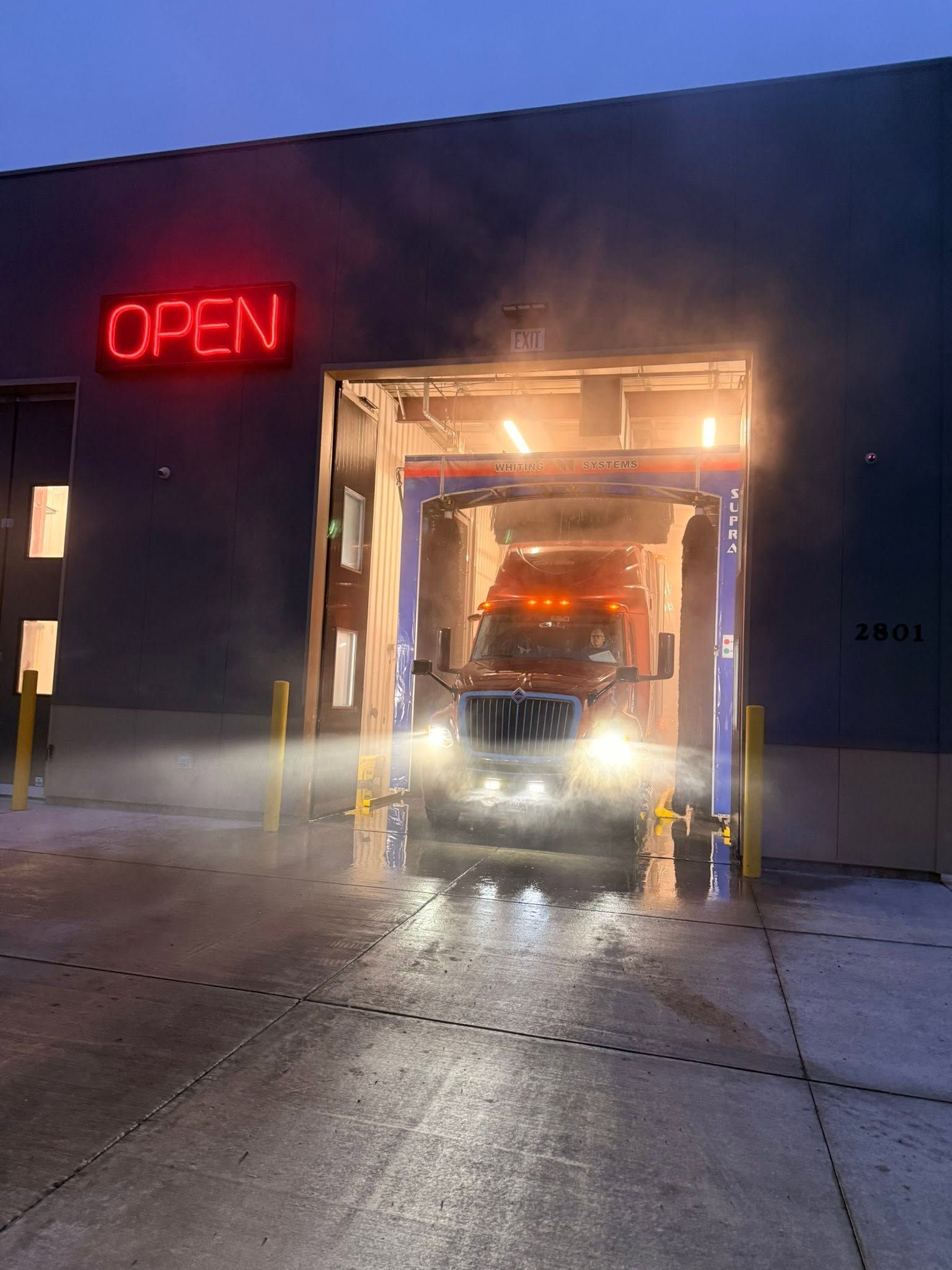
The washing process removes the layers of road film, brine, and embedded mud that accumulate during long hauls through Montana's weather conditions. Each bay is equipped to handle full-size semis and combination rigs, with water pressure calibrated to clean without damaging paint, decals, or protective coatings. The pre-rinse step matters because it prevents abrasive particles from being ground into the finish during the main wash cycle.
After the wash is finished, you'll notice that the frame rails, suspension components, and undercarriage are cleared of the salt and brine residue that leads to rust. The truck's body panels and chrome trim come clean without streaking or water spots, and the wheel wells no longer hold packed mud that retains moisture against metal surfaces. What was previously obscured by road grime becomes visible again, which also means pre-trip inspections become more accurate because you can actually see what you're looking at.
This facility has been operating for four years with a quality-focused culture that prioritizes doing the job right over rushing trucks through the bay. Courtesy vacuums are available on-site, and the property functions as a destination where drivers can take care of multiple needs during a single stop. Big Iron washes anything that comes through the door, from standard day cabs to oversized ag haulers, and military customers receive a discount as part of the business's pro-military policy.
What Drivers Usually Ask Before Scheduling
Drivers running central Montana routes often have similar questions before bringing a rig in for washing, especially those dealing with winter road treatments and spring mud season conditions.
What makes this wash different from a standard truck rinse?
The process here was designed by someone who drove commercially for 25 years and understood that brine removal requires more than high-pressure water—it requires a sequenced approach that starts with loosening corrosive buildup before scrubbing begins, which prevents paint damage and actually cleans the surfaces where rust starts.
How does the wash handle caked mud from Highway 87 and I-15 hauls?
Pre-rinse cycles are calibrated to break down packed mud in the wheel wells and undercarriage before the main wash, and the two-bay setup means there's space to work methodically rather than rushing trucks through a single lane.
Can you wash combination rigs and oversized equipment?
Big Iron handles full-size semis, tandem trailers, and ag haulers without restrictions—the bays were built to accommodate the actual equipment running Montana roads, not just standard-length trucks.
What happens to road brine that's already started corrosion on the frame?
The wash removes active brine and salt residue to stop further corrosion from progressing, and once the frame is clean, you can assess existing rust and address it before it spreads to structural components.
Are there amenities available while the truck is being washed?
Courtesy vacuums are located on the property, and the facility is set up as a destination where you can handle other tasks rather than waiting in the cab—drivers use the grounds for walk-throughs and equipment checks while the wash is in progress.
Big Iron Truck & RV Wash operates as a locally owned, family-run business where the standard is quality over speed. Bring your rig through Great Falls and see what a wash built by a trucker actually looks like in practice.